RIT vs percentile vs grade level: 3 MAP numbers parents mix up
The MAP® report came home with three numbers on it, and no instructions. Your sixth grader has a RIT® of 232. A percentile in the seventies. And somewhere, in the report or a score chart the school shared, language suggesting she is performing like a much older student. You are proud and confused in the same breath. Does the 232 mean she is doing ninth-grade math? Is the percentile the real grade? If you have been searching RIT vs percentile MAP, trying to work out which number actually matters, here is the plain-language version. None of the three numbers means quite what it looks like, and once you can read them, the report gets a lot calmer.
The short answer
- The RIT (here, 232) estimates achievement on a single scale that spans all grades. It is roughly how hard the questions are that your child can answer correctly. It is not a percent correct.
- The percentile compares your child to other students in the same grade and season. It is a rank, not a score, and it can fall even when the RIT goes up.
- Grade-level language is the part parents misread most. A sixth grader "scoring like a ninth grader" is not doing ninth-grade math. She scored where older students often score on the same scale.
- Together the three numbers tell you where your child sits and how she compares. They do not tell you which specific skills are stable and which are shaky.
- Read on for what each number is, what it is not, and how it moves.
RIT: roughly how hard the questions are that your child can handle
RIT stands for Rasch Unit, named for the mathematician whose model underlies it. It estimates achievement on a vertical scale that runs from about 100 to 300 across all grades. A higher RIT generally corresponds to success on more difficult math items. It is not a percent correct, and it is not a grade level.
The useful thing about RIT is that it is the one number built to stay comparable over time. The scale is equal-interval, like a ruler: the distance from 210 to 220 means about the same as the distance from 230 to 240. That is what lets you track growth over time more reliably than a percentile alone. You can see where most students land at each grade in the MAP RIT score by grade chart.
A RIT of 232 sits well above the typical sixth-grade range. Plotted against grade-level averages, it lands up where older students usually sit.
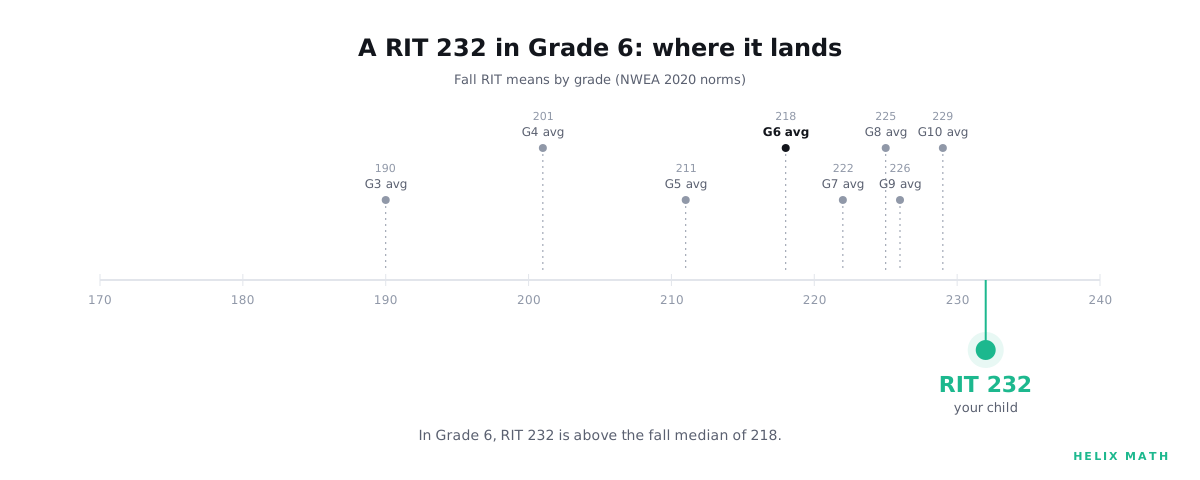
That is genuinely strong. It also says nothing yet about which skills are solid underneath the number. A high RIT tells you a child handled hard items. It does not tell you whether the harder skills are stable or whether a few foundational ones are quietly shaky. That is the broader subject of what MAP scores don't tell you.
The percentile: how your child compares to peers, not how much she knows
The percentile is a different kind of number. It is norm-referenced, which means it ranks your child against a national sample of students in the same grade and the same testing season. A percentile in the seventies means your child scored higher than about that share of same-grade peers.
It is not a percent correct, and it is not a grade. A 75th percentile does not mean she got 75% of the questions right. By design, the test targets about 50% accuracy, so most students miss roughly half the items no matter how well they do.
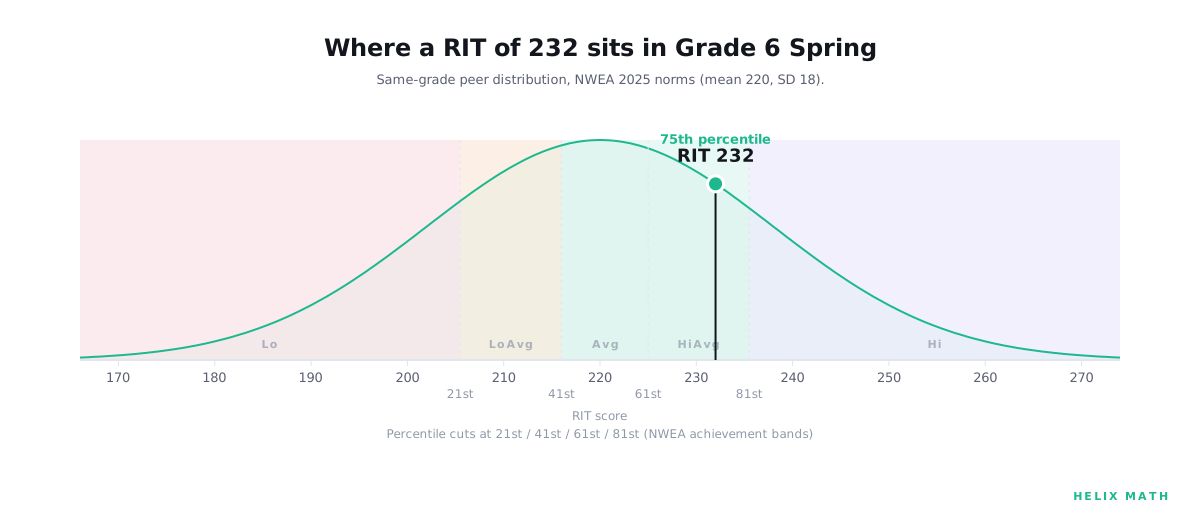
The percentile is also the number most likely to move in ways that worry parents. It can fall even when the RIT rises, because the percentile depends on how everyone else did, and on which year's norms the school uses. She learned. Her rank changed. Those are different facts. If you want the longer version of that, we wrote about growth, achievement, and rank and about why the percentile can drop while the RIT rises.
Grade-level language: the part parents misread most
Here is the language that causes the most confusion, and the misread a good teacher will gently correct at every conference. The official report leads with RIT and percentile, but some school portals and third-party score charts translate a RIT into grade-level language, and that translation is the easiest thing on the page to misread.
If someone tells you your sixth grader is "scoring like a ninth grader," it does not mean she has been taught ninth-grade math. She scored in a range where older students often score on the same vertical achievement scale. That is a comparison, not a curriculum statement.
That distinction is the whole thing. She did not see ninth-grade content. The test did not cover slope, or systems of equations, or the topics a ninth grader is actually working on. She answered the items she was given unusually well, and the grade-level comparison turns that into a rough yardstick: among older students on the same scale, she would land around there.
So this is a comparison, not a curriculum. It tells you she is ahead of her grade on this measure. It does not mean she has the skills a ninth grader has been taught, and it is not a reason to skip her ahead on its own. A sixth grader can score like a ninth grader and still have a shaky spot in fifth-grade fractions that no one has caught, because being on grade level, or above it, is an average that can hide a soft spot underneath.
What you can do this week
Read the three numbers as one sentence instead of three verdicts.
Say it as a sentence. "On this test, my child handled fairly hard material (the RIT), scored higher than most same-grade peers (the percentile), and performed about like an older student would (the grade-level line)." That sentence is the honest summary. Each number alone invites a misread.
Don't over-read the grade-level number. It is a comparison to older test-takers, not proof of older-grade skills. If your child is happy and not bored, you do not need to act on it this week.
Watch the RIT over time, not the percentile swings. A single percentile can bounce with the norming group and the season. Three RIT scores across three terms tell you far more than one percentile ever will.
If you want to know which skills are actually solid, ask a narrower question. The three numbers describe altitude and rank. They do not name the specific skills behind the score, and that is the question worth asking next.
Three numbers, one missing layer
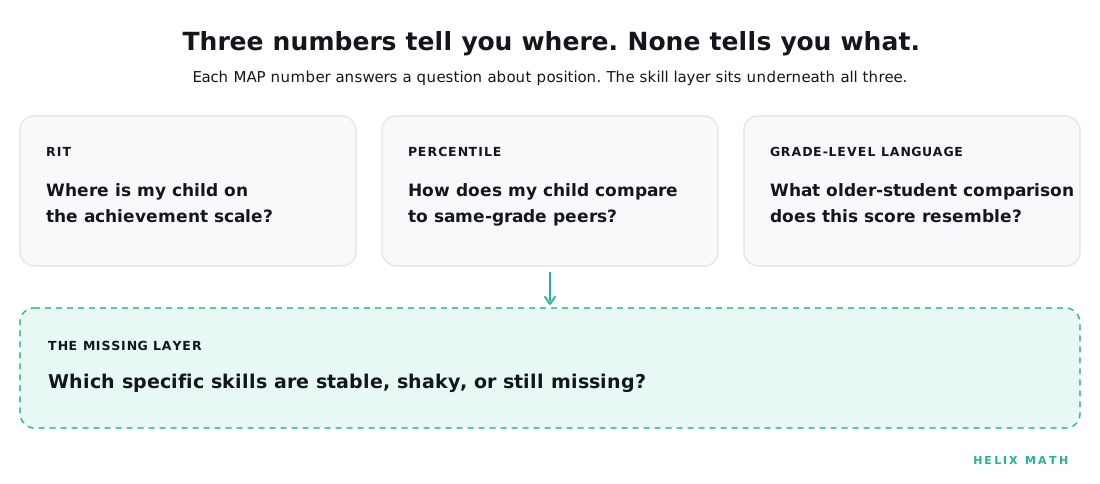
The RIT tells you roughly how hard the questions were. The percentile tells you how your child compares. The grade-level line tells you how she stacks up against older students on the same test. All three are real, and all three are about position: where your child sits, and next to whom.
None of them tells you which specific skills are stable and which are still shaky. That layer lives underneath all three numbers, and it is the one that actually guides what to practice next. That is what Helix Math was built to surface: the skill-level layer underneath the score. The Helix Program begins with a 30 to 40 minute diagnostic that shows which skills are secure, which are still developing, and which may need attention next.
Three numbers can tell you a great deal about where your child stands. They were never meant to tell you what to do on Monday.
MAP® and RIT® are registered trademarks of NWEA. Helix Math is not affiliated with or endorsed by NWEA.